

In 1997, Apple stood on the precipice of bankruptcy, burdened by an bloated product line, aging software, and staggering financial losses. The company’s remarkable turnaround was ignited by Steve Jobs’ return, which prioritized extreme simplicity, a radical reduction in product complexity, and a design-first philosophy. By moving from a struggling computer maker to an experience-driven ecosystem powerhouse, Apple not only saved itself but fundamentally reshaped the trajectory of the modern technology industry.
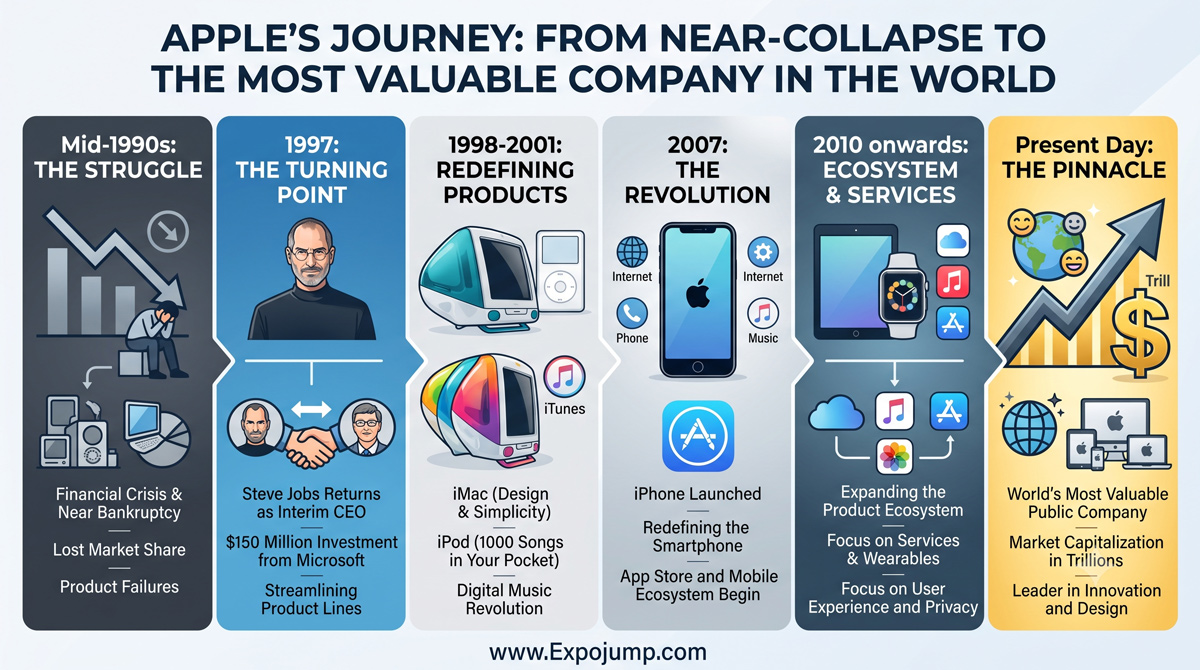
The Crisis (1996–1997)
Apple was facing:
Too many products
High costs, low competitiveness
Poor sales performance
Aging OS and outdated strategy
By 1997:
Over $1B annual losses
Market share under 5%
Analysts predicted bankruptcy within 12 months
Apple was nearly finished.
The Turning Point – Steve Jobs Returns
In 1997, Steve Jobs returned with a bold mission:
Extreme focus
Innovation rooted in experience
Eliminating complexity
Rebuilding culture and identity
“Focus means saying no to a thousand good ideas.”
Key Strategic Actions
🔥 A) Cutting Products from 350 → to Just 4
A simple matrix:
Desktop Portable
Pro Consumer
This restored focus and efficiency.
🔥 B) Reinventing Apple’s Product Design
Launch of iMac
🎯 Simplicity, color, emotion — a new Apple was born
🔥 C) Strategic Partnership with Microsoft
Microsoft invested $150M
and committed to developing Office for macOS.
This restored confidence in Apple.
🔥 D) New Product Ecosystem
Leading to iconic innovations:
iPod → Music revolution
iPhone → Smartphone revolution
iPad → Mobile computing revolution
Apple evolved from a computer maker into
a global experience-driven technology company.
🔥 E) Cultural Transformation
- Removing bureaucracy
- Faster decision-making
- Design-first mindset
- User experience obsession
Results
First company to hit $1 trillion valuation
Dominant in smartphone & tablet markets
One of the most profitable firms in history
Why It Worked
- Bold leadership
- Relentless focus
- Seamless integration of hardware + software
- Game-changing innovation
- Deep understanding of user needs
Summary
Apple’s turnaround is one of the most iconic in modern business history:
“Innovation is about making things better — not just new.”
Frequently Asked Questions
What caused Apple to nearly go bankrupt in the late 1990s?
Apple faced a severe crisis fueled by a bloated lineup of nearly 350 products, an aging operating system, and a lack of clear strategic direction. By 1997, the company was bleeding over $1 billion annually, holding less than 5% market share, and analysts predicted total collapse within a year.
How did Steve Jobs save Apple from collapse?
Upon returning as CEO in 1997, Steve Jobs implemented a strategy of extreme focus. He famously slashed the product line down to a simple four-quadrant matrix—desktop, portable, pro, and consumer—eliminating complexity and steering the company toward a design-first philosophy.
Why was the Microsoft partnership crucial to Apple’s turnaround?
At the height of its financial crisis, Apple secured a strategic $150 million investment from Microsoft. Alongside the capital injection, Microsoft committed to developing its Office suite for macOS, which played a massive role in restoring market confidence and stabilizing the company.
What role did product design play in Apple’s transformation?
Design became the ultimate differentiator for Apple, starting with the original iMac. By prioritizing simplicity, vibrant colors, and emotional resonance, Apple shifted from a traditional computer manufacturer to a brand deeply obsessed with user experience and seamless aesthetics.
How did Apple transition into a trillion-dollar company?
Apple moved beyond desktop computing by building a deeply integrated product ecosystem. The sequential launches of category-defining hardware like the iPod, iPhone, and iPad revolutionized the music and mobile industries, driving unprecedented profitability and making Apple the first public company to reach a $1 trillion valuation.