

To successfully execute a corporate event or hybrid summit in 2026, you must immediately secure your venue and headlining speakers 4 to 6 months in advance, allocate a strict 10-15% contingency budget, and deploy an integrated tech stack (like Zkipster or Lyyti) to automate attendee management. This checklist eliminates the guesswork by providing the exact framework you need: a chronological timeline paired with thematic deep-dives into modern event pillars, including budget tracking, AI automation, ADA/DEI accessibility, and green sustainability, ensuring every logistical detail is locked down from concept to post-event ROI analysis.
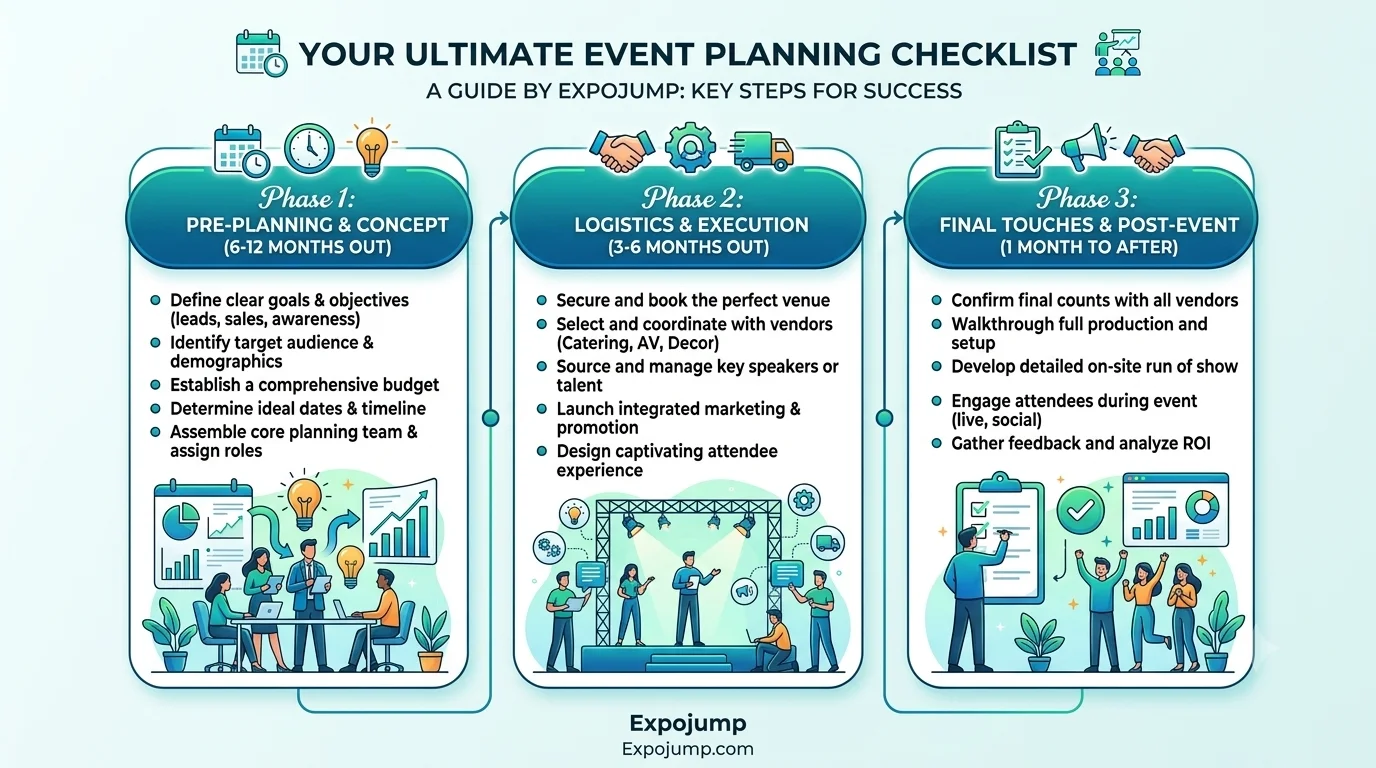
Your Event Planning “Second Brain”
This 2026 event planning checklist acts as your “second brain,” specifically engineered to eliminate the stress of organizing complex in-person galas or hybrid corporate summits. You are juggling venue contracts, attendee data, and tight deadlines—relying on memory or fragmented spreadsheets is a guaranteed path to burnout. This guide provides the exact, foolproof structure you need to ensure absolutely no detail falls through the cracks.
Whether you are an HR manager organizing an internal retreat or a professional orchestrating a high-stakes Event Marketing campaign, success requires reliable systems. We have combined chronological countdowns with thematic deep-dives into core event pillars, from budget management to venue sourcing.
To future-proof your strategy, this blueprint also integrates modern necessities that traditional checklists gloss over: AI-driven Event Management Software, strict accessibility and DEI standards, green event sustainability, and robust contingency planning (Plan B). Consider this your definitive guide to structure, reliability, and total peace of mind from concept to post-event wrap-up.
Phase 1: Strategy & Foundation (The ‘Why’ and ‘Who’)
A successful event is built on concrete data and clear directives, not aesthetics. This foundational phase dictates every subsequent decision in your corporate event planning process, locking in your objectives, financial boundaries, and operational hierarchy before a single vendor is contacted.
Defining Your Event Goals & KPIs
Your event’s Return on Investment (ROI) is determined entirely by the Key Performance Indicators (KPIs) established on day one. Define exactly what quantitative and qualitative success looks like before launching any B2B Event Marketing initiatives. If your objective is lead generation, track the number of qualified meetings booked and the cost per acquisition. For internal corporate summits, measure employee engagement scores and knowledge retention through a post-event survey. Document these targets directly in your Event Management Software to ensure all stakeholders are aligned and performance is trackable in real-time.
Establishing a Bulletproof Budget
Create a comprehensive event budget template that strictly isolates projected costs, actual expenditures, and vendor payment deadlines. Immediately allocate a 10% to 15% event contingency fund; this non-negotiable financial buffer absorbs unexpected variables, such as emergency AV equipment rentals or sudden increases in venue service fees.
Core Event Budget Categories:
According to Cvent:
When developing your event strategy, establishing a strict financial framework is paramount. According to industry standards, an effective event budget doesn’t just track expected baseline expenses like venue rental, AV equipment, and catering. It must also build in a mandatory contingency fund to absorb sudden price fluctuations or emergency logistical changes. Experts strongly recommend setting aside at least 15% to 20% of your total estimated budget specifically for these unexpected costs. This proactive financial modeling prevents last-minute compromises that could otherwise negatively impact the attendee experience and damage your overall event ROI.
Building Your Event Team & Assigning Roles
Assign distinct, non-overlapping roles to your organizing committee to eliminate operational bottlenecks. In high-stakes environments, overlapping responsibilities lead to dropped tasks. Designate specific owners for core pillars: operations and logistics, sponsor agreements, Exhibition Marketing, and guest list management.
For large-scale or high-tier events, consider integrating specialized roles or external partners, such as an Expo Concierge to manage VIP requests and virtual attendee troubleshooting. Document this hierarchy in your primary Call Sheet so that on the day of the event, every staff member and vendor knows exactly who has the final sign-off for specific issues.
Phase 2: Operations & Logistics (The ‘Where’ and ‘How’)
Operations translate your strategy into physical reality by securing the infrastructure, technology, and safety protocols necessary to execute the event. This phase dictates the physical constraints of your event, the digital experience of your attendees, and the legal protection of your organization.
Venue Selection & Accessibility
Venue sourcing requires strict alignment with your maximum attendee capacity, technical specifications, and absolute inclusivity standards. Do not sign a venue contract without verifying its technical backbone—specifically, dedicated high-speed Wi-Fi bandwidth that can sustain live streaming for hybrid events without throttling.
Modern venue selection mandates comprehensive Accessibility and Diversity, Equity, and Inclusion (DEI) compliance. You must look beyond basic ADA guidelines (like wheelchair ramps and accessible seating) and secure venues that offer gender-neutral restrooms, dedicated prayer rooms, and quiet zones for neurodivergent guests. Verify logistical basics simultaneously: ensure parking capacity matches your guest list and that the venue layout facilitates a smooth flow of foot traffic to prevent bottlenecking near catering stations or exits.
The Modern Event Tech Stack
Replace manual spreadsheets with an integrated event tech stack to manage data seamlessly from initial registration to the final post-event survey. Deploy specialized event apps or a modern ticketing platform—such as Zkipster or Lyyti—to digitize guest list management, process dynamic QR-code check-ins, and instantly print badges to eliminate front-door queues.
Leverage AI-driven event tools to scale your attendee communication efficiently. Implement automated chatbots on your event website to handle routine inquiries regarding parking or dress code, and use automated SMS systems to push real-time schedule updates or room changes directly to both in-person and virtual attendees.
Permits, Insurance, and Contingency Planning
An Event Contingency Plan (Plan B) is a mandatory operational shield, not an optional add-on. Secure comprehensive liability insurance immediately to protect your organization against property damage, vendor negligence, or attendee injury. Simultaneously, apply for all required local permits—covering alcohol service, noise ordinances, and temporary structural builds—at least 90 days out to avoid last-minute municipal shutdowns.
You must map out exact protocols for high-probability risks (weather disruptions, total Wi-Fi failure, or sudden speaker cancellations). Embed these recovery protocols directly into your Run of Show (RoS).
Basic Risk Management Matrix: